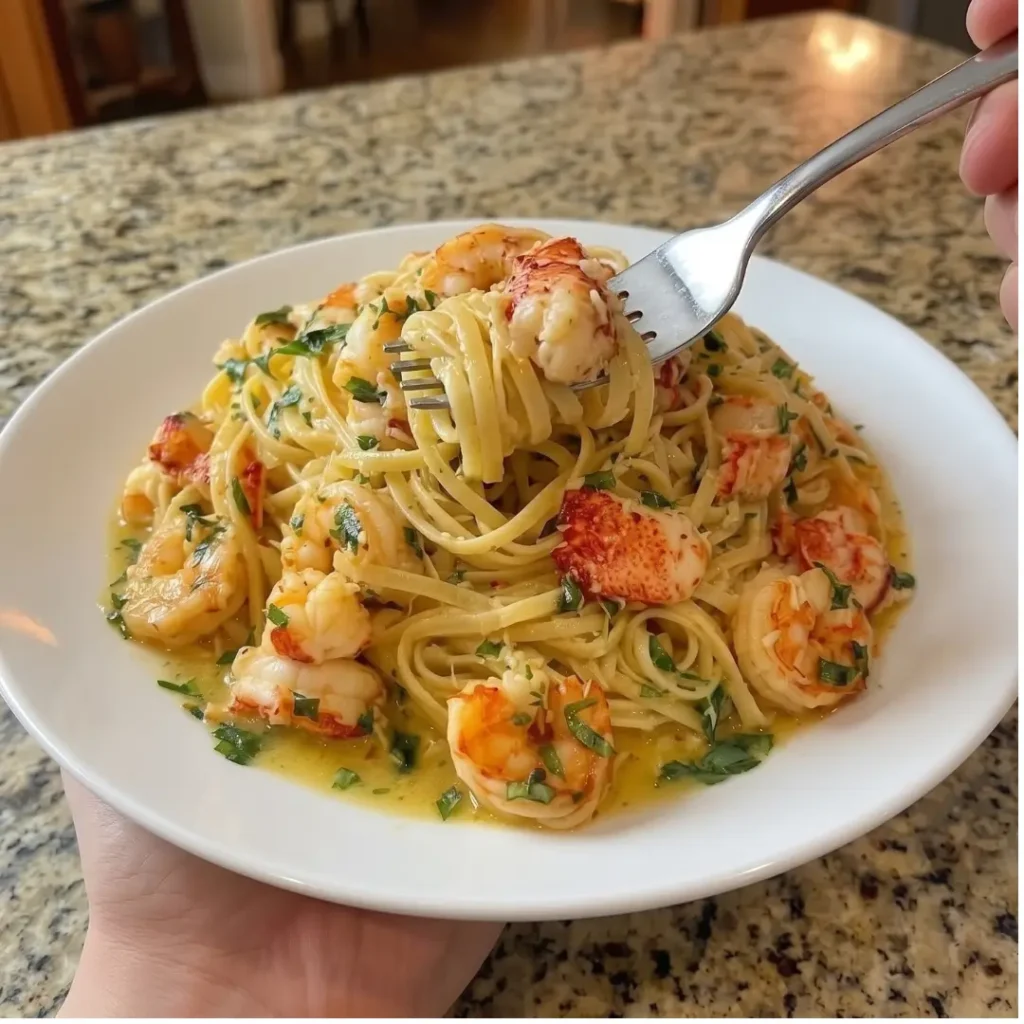
Garlic butter lobster and shrimp linguine combines cooked lobster meat, freshly cooked shrimp, and pasta in a lemon butter sauce. Stock keeps the sauce light enough to coat the noodles, while Parmesan, parsley, and basil finish the dish. There is no heavy cream in this version.
The recipe takes about 35 minutes. Because the lobster is already cooked, it is added near the end and warmed gently with the pasta. Measure the sauce ingredients and grate the Parmesan before starting. Jump to the recipe card for the full ingredient list and method.
What Makes This Lobster and Shrimp Linguine Work?
The shrimp cook first and leave the skillet while the garlic butter sauce is made. This allows you to lower the heat for the garlic without keeping the seafood cooking throughout the sauce stage. The cooked lobster then needs only a brief warming during the final toss.
Seafood or chicken stock adds liquid to the butter and lemon mixture. Parmesan helps the sauce cling to the pasta, and a little reserved pasta water can loosen it when needed. The aim is a glossy coating rather than a thick cheese sauce or a bowl of broth.
Garlic Butter Lobster and Shrimp Linguine Ingredients
- 12 oz linguine
- 1 lb large shrimp, peeled and deveined
- 12 oz cooked lobster meat, cut into generous chunks
- 5 tbsp unsalted butter
- 1 tbsp olive oil
- 5 garlic cloves, finely minced
- ¾ cup seafood or chicken stock
- ½ cup freshly grated Parmesan cheese
- 2 tbsp fresh lemon juice
- ½ tsp Italian seasoning
- ¼ tsp red pepper flakes
- Salt, to taste
- Freshly cracked black pepper, to taste
- 3 tbsp fresh parsley, finely chopped
- Fresh basil leaves, for garnish
- Extra Parmesan, for finishing
Seafood and Pasta Notes
Use cooked lobster meat as specified, cut into generous pieces and checked for shell fragments. The shrimp start raw, peeled, and deveined. If either ingredient is frozen, follow its thawing instructions and drain excess moisture before cooking or warming it.
Linguine’s long strands suit the sauce, though spaghetti or fettuccine are alternatives listed for this recipe. Follow the pasta package directions for an al dente texture. Reserve about ½ cup of its cooking water before draining, even if you may only need a small amount.
How to Make Lobster and Shrimp Linguine
1. Cook the Linguine
Boil the linguine in salted water until al dente. Reserve about ½ cup of pasta water, then drain. Have the cooked noodles ready for the sauce instead of leaving them in boiling water while you prepare the seafood.
2. Cook the Shrimp
Heat the olive oil with 1 tablespoon of butter in a large skillet over medium heat. Season the shrimp with salt and pepper, then cook for about 1–2 minutes per side, adjusting for size and checking that they are cooked through. Transfer them out of the skillet.
3. Make the Garlic Butter Sauce
Melt the remaining 4 tablespoons of butter in the same skillet. Add the garlic and cook for about 30 seconds, until fragrant. Pour in the stock and lemon juice, then stir in the Italian seasoning and red pepper flakes. Simmer for 2–3 minutes.
4. Toss with Lobster and Pasta
Add the cooked lobster, shrimp, linguine, and Parmesan. Toss gently until the seafood is warmed through and the noodles are coated. Add a little reserved pasta water only as needed to loosen the sauce. Keep the lobster chunks intact rather than stirring vigorously.
5. Finish the Plates
Divide the linguine and seafood among plates, distributing the lobster and shrimp evenly. Spoon over any remaining sauce from the skillet. Finish with parsley, basil, and extra Parmesan, then serve hot rather than keeping the assembled pasta over heat.
Tips for a Silky Sauce and Tender Seafood
Keep the lobster out of the skillet until the final stage. It is already cooked, so simmering it while making the sauce can make it firm and dry. The shrimp should also leave the pan once cooked and return only for the brief final warming.
Add the pasta water gradually. It is easier to loosen a sauce that is slightly tight than to remove excess liquid after the seafood has been added. The noodles and Parmesan affect the consistency as you toss, so check the coating before deciding whether more water is needed.
Lower the heat if the garlic starts coloring too quickly. It should become fragrant without scorching. Have the measured stock close by so the next step is ready. A wide skillet and tongs make it easier to lift the noodles through the sauce without crushing the lobster.
Serving Ideas and Related Seafood Pasta
A green salad provides freshness alongside the buttery linguine. Garlic bread is optional for catching sauce, but the pasta already makes the meal substantial. Keep extra Parmesan and black pepper at the table so each person can finish their portion to taste.
For pasta featuring seared scallops, try scallop scampi with garlic bread. If you prefer a creamier cheese sauce with Cajun-seasoned shrimp, see Cajun garlic butter shrimp with cheesy spaghetti. Both offer alternatives using a different seafood or sauce base.
Frequently Asked Questions
Can I use frozen lobster and shrimp?
Yes, just thaw both completely and pat dry before cooking for the best texture.
Can I use a different pasta shape?
Yes, fettuccine or spaghetti would both work well in place of linguine.
Can I leave out the lobster?
Yes, shrimp alone still makes a delicious, flavorful pasta if lobster isn’t available.
Lobster and Shrimp Linguine Recipe Card
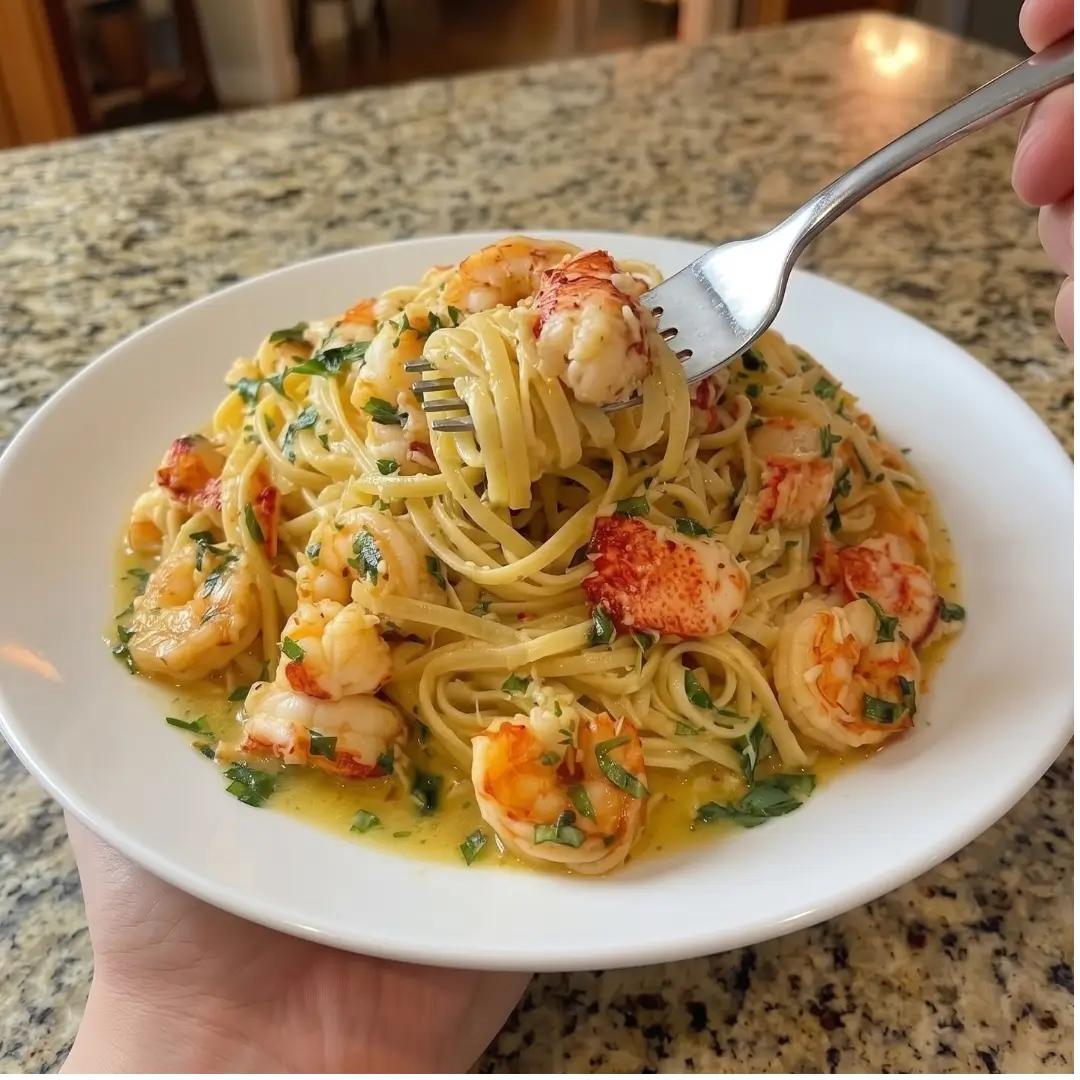

Garlic Butter Lobster & Shrimp Linguine
Ingredients
Equipment
Method
- Boil the linguine in salted water until al dente. Reserve about ½ cup pasta water, then drain.
- Heat the olive oil and 1 tbsp butter in a large skillet over medium heat. Season the shrimp with salt and black pepper, then cook for 1 to 2 minutes per side until pink and cooked through. Remove and set aside.
- Melt the remaining 4 tbsp butter in the same skillet. Add the garlic and cook for about 30 seconds until fragrant. Pour in the stock and lemon juice, then stir in the Italian seasoning and red pepper flakes. Simmer for 2 to 3 minutes.
- Add the cooked lobster, shrimp, linguine, and Parmesan. Toss gently until the seafood is warmed through and the pasta is coated in garlic butter sauce. Add a little reserved pasta water as needed to keep the sauce silky.
- Divide the lobster and shrimp linguine among plates. Spoon any remaining garlic butter sauce over the top and finish with parsley, fresh basil, and extra Parmesan. Serve hot.